
CONGO MULENCE [DOWNLOAD]
As Recorded by Machito and His Afro-Cubans
Arranged by A.K. Salim, Transcribed by Nate Sparks
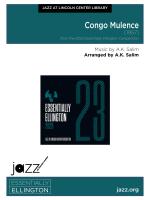


Cat #: JLC-5122-DL
$50.00This product is available for immediate download after purchase.
Questions?
Please call +1-518-587-1102 or email us.
View Sample Page:

Edition: Jazz Big Band Arrangement
Description: Son Montuno Afro - Difficult
Publisher: Jazz at Lincoln Center
The title of CONGO MULENCE was suggested to Salim by Francisco Raúl Guttierez Grillo de Ayala, A.K.A. Machito. The front man and vocalist for the Afro-Cubans was steeped in the street drumming, dancing, and vocal traditions of the rumba in his native Havana. Born in the tenements and barracóns (bunk houses) near the docks, the rumba is indeed one of the islands most profound musical and cultural traditions. Many legendary figures from that tradition attained mythical status, amongst them Chano Pozo, Candido, Mongo Santamaria, and Mulence. Adding Congo to the title signified the region of Africa his roots were from, the West Central nation of Zaire, also known as the 'Congo.' The piece begins with a lone conga drum playing an ad libitum roll withopen tones. What better way to acknowledge the Bantú Congolese roots of both the conga drum and the titular figure? To add some theatrical flair to the proceedings, your conga player may choose to do a short ad libitum solo ending it with the roll before the in-tempo entrance of the rest of the percussion section. Here the rhythm is Afro which is also known Afro Son or Son Afro.
A composite rhythm made up of elements of a rhythm called Wardo played on the sacred Yoruba rooted hour glassed shaped batá drums for the religious ceremonies. Its rhythmic cadence is at the root of the funk rhythm drummer Harvey Mason played on Herbie Hancock’s hit recording of his now classic composition, Chameleon on the 1973 album Headhunters. Your drummer can play this same rhythm during the second section, at a light volume effectively blending in with the percussion playing the Afro rhythm. At one time this rhythm was very popular in Cuban music, particularly in the 1930s. A prime example of this is Ernesto Lecuona’s classic composition, Babalú, which was made famous by Cuban vocalist, percussionist, guitarist Miguelito Valdés (September 6, 1912 – November 9, 1978) with his recording with the Orquesta Casino De La Playa. It would behoove you as the band director to play that recording for your students. The piece would get new life and become part of 'Americana' when Cuban born vocalist and entertainer Desi Arnaz (with his wife Lucille Ball) would make it integral to their show, 'I Love Lucy.' Before approaching playing the chart, have your students learn this history. Afro-Cuban jazz comes from a majestic culture that is tied at the hip to its rhythmic roots in Africa; this all came to fruition in New York City combining jazz harmony, improvisation, and arranging. Listen to the recording of the music with absolutely no interruptions. Then, begin to discuss with them what they’ve heard.
From the 2023 Essentially Ellington Competetion.
Solo Trumpet
Solo Alto Saxophone
2 Alto Saxophones
2 Tenor Saxophones
Baritone Saxophone
4 Trumpets
3 Trombones
Piano
Bass
Drum Set
Congas
Guiro
Timbales
Trombone 1: Db5
You May Also Like


ESSENTIALLY ELLINGTON 2023: COMPLETE EIGHT ARRANGEMENT SET
Essentially Ellington 2023; Jazz at Lincoln Center Library
Jazz Big Band Arrangements
Jazz at Lincoln Center
JLC-2023
$350.00
ESSENTIALLY ELLINGTON 2023: COMPLETE EIGHT ARRANGEMENT SET [DOWNLOAD]
Essentially Ellington 2023; Jazz at Lincoln Center Library
Jazz Big Band Arrangements
Jazz at Lincoln Center
JLC-2023-DL
$350.00
As Recorded by Machito and His Afro-Cubans
Jazz Big Band Arrangement
Jazz at Lincoln Center
JLC-5120
$50.00
As Recorded by Machito and His Afro-Cubans
Jazz Big Band Arrangement
Jazz at Lincoln Center
JLC-5120-DL
$50.00
As Recorded by the Count Basie Orchestra
Jazz Big Band Arrangement
Jazz Lines Publications
JLP-5165
$75.00

